


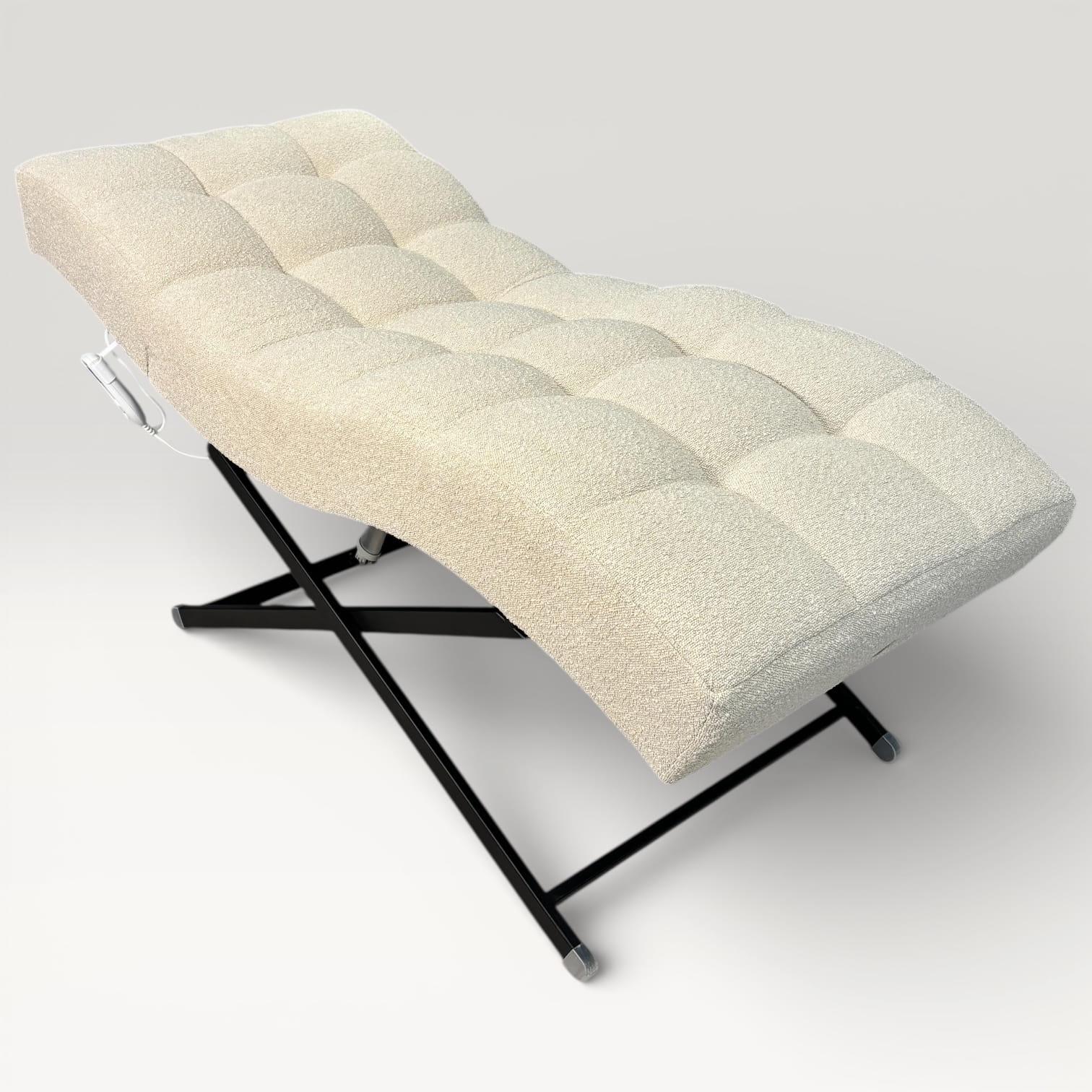
Choosing a beauty bed for a salon is not only about appearance. One of the most important decisions is whether to choose an electric model or a manual one. Both options have their strengths, but they work best in different types of salons and treatment spaces.
The right choice depends on the treatments you offer, your daily workflow, and the level of comfort you want to provide for both your clients and your team. Understanding the practical difference between the two makes it much easier to invest in a model that truly supports your business.
1. What is the main difference?
The key difference lies in the way the bed is adjusted. A manual beauty bed usually has a more fixed structure or simple adjustment mechanisms, while an electric beauty bed allows you to change the position or height more comfortably and with less physical effort.
In practice, this means that an electric model gives you more flexibility during treatment preparation and daily use. A manual model can still work very well, but it is better suited to salons with simpler workflows or more specific treatment needs.
2. When does an electric beauty bed make more sense?
An electric beauty bed is especially useful in salons where:
- treatments are performed for many hours a day,
- work ergonomics are a priority,
- the therapist needs better control over height and positioning,
- the salon wants to offer a more advanced premium experience.
For many beauty professionals, electric adjustment makes daily work easier and more efficient. It can reduce strain, improve posture, and create a more comfortable environment during long appointments.
An electric model also adds to the overall perception of the salon. It often feels more modern, more advanced, and more aligned with a premium service standard.
3. When is a manual beauty bed enough?
A manual beauty bed can still be a very good choice, especially in salons where the workflow is simpler and the same basic setup works well for most treatments.
It may be a suitable option if:
- you do not need frequent adjustments during the day,
- your services are focused on one type of treatment,
- you prefer a simpler construction,
- you want a visually elegant and functional solution without additional mechanisms.
What matters most is not whether the bed is electric or manual, but whether it supports your real needs. A well-designed manual beauty bed can still look premium, feel comfortable, and work perfectly in the right setting.
4. Comfort and workflow should guide the decision
When choosing between electric and manual, it is worth thinking beyond the technical difference and asking how the bed will affect your daily routine.
Consider:
- how often you need to adjust the position,
- how many hours a day the bed will be used,
- whether the bed must adapt to different treatments,
- how important speed and convenience are in your workflow.
In a busy salon, even small improvements in ergonomics can make a big difference over time. In a more focused treatment space, a manual model may still be fully sufficient.
5. The visual aspect matters too
Both electric and manual beauty beds can look elegant, refined, and professional. The final effect depends on the overall design, the proportions, and how well the bed fits the style of the interior.
In premium salons, equipment is part of the brand image. Clients notice details, finishes, and consistency. That is why the bed should not only function well, but also match the visual identity of the space.
Whether you choose electric or manual, the model should support the atmosphere you want to create.
Summary
There is no single answer that works for every salon. An electric beauty bed is often the better solution for salons that need more flexibility, better ergonomics, and a more advanced treatment setup. A manual beauty bed can be an excellent choice for salons that prefer a simpler structure and have more focused treatment needs.
The best decision is the one that fits your real way of working, supports your daily comfort, and helps you build the kind of salon experience your clients will remember.